
The former RBI Governor also emphasised on the need to boost economic productivity and attract investments.

RBI must balance the need for improving domestic bank credit demand and respond to lower inflation.

The government had no option but to cut spending to meet its borrowing targets.

Experts caution against tough times in Indian equity markets in 2015.

Amid a grim global scenario, India will have to labour hard to hold on to seven per cent growth in 2016-17.

Prices of natural gas, which is used to produce fertiliser and generate electricity and is also converted into CNG for use in automobiles as fuel and cooking gas for households, are set every six months -- on April 1 and October 1 each year.

Shaktikanta Das is a master of the finest balancing act who listens to all but takes his own decisions, discovers Tamal Bandyopadhyay.

The rupee had recovered from its 29-month lows by rising 39 paise to close at 67.63 on Friday.

Foreign investors pumped in Rs 11,119 crore in the Indian equities in December, making it the second consecutive monthly inflow, despite increasing concerns over the re-emergence of Covid-19 cases in some parts of the world. However, foreign portfolio investors (FPIs) have turned cautious in recent days. The inflow in December was much lower compared to Rs 36,239 crore invested by FPIs in the month of November, data with the depositories showed.

Not only is gold a hedge against currency depreciation, rising crude prices and uncertainty, it is up 7 per cent (in dollar terms) in the past 12 months, says Devangshu Datta.

The measures to reduce the current account deficit should have focused far more on narrowing the trade imbalance, principally through export facilitation and linked FDI, says Nitin Desai.

Equity indices chalked up losses for the second straight session on Monday, in tandem with a bearish trend overseas as ratcheting up of hostilities in Ukraine and prospects of further rate hikes by the US Fed soured global risk sentiment. The rupee slipping to another all-time low against the US dollar amid foreign fund outflows added to the gloom, traders said. After tumbling over 800 points in intra-day trade, the 30-share BSE Sensex clawed back some lost ground to end 200.18 points or 0.34 per cent lower at 57,991.11.

Shreekant Sambrani remembers P R S 'Biki' Oberoi, personal friend and hospitality icon, who passed into the ages this week.

Economic affairs secretary S C Garg said that all macroeconomic parameters are performing well.

Dr Reddy's was the top gainer in the Sensex pack, rising over 3 per cent, followed by PowerGrid, TCS, HCL Tech, Infosys and Reliance Industries. On the other hand, L&T, IndusInd Bank, Bajaj Finserv and Bharti Airtel were among the laggards.

India always faces a Hobson's choice as far as feeding coal-fired generators goes - even if the government is reluctant to admit it. The country cannot do without shipping in the world's most polluting fuel from overseas. And it will continue to do so unless it decides to reduce demand by forcing citizens, farmers and businesses to live without electricity for part of the day, or use diesel generators to fire facilities.

The broader NSE Nifty closed below the 10,600 mark by plunging 98.15 points, or 0.84 per cent, to 11,582.35 after shuttling between 11,567.40 and 11,751.80.

Budget is widely seen as a test of Prime Minister Narendra Modi.

A fall in the rupee could boost exports. But the flip side of the equation is that a weaker rupee could stoke some inflation
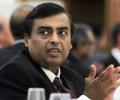
The oil-to-telecom conglomerate reported an 8.8 per cent rise in its consolidated net profit to Rs 10,251 crore, or Rs 17.3 per share, in the third quarter ended December 31, 2018.
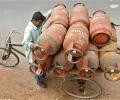
India's cities must switch over to piped gas leaving LPG cylinders.
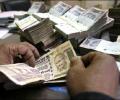
Dealers attributed the rupee's fall to fresh demand for USD.
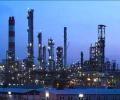
These refineries, commissioned mostly in the 1950s and 1960s during India's early industrialisation push, are inefficient and costly to maintain compared to their modern counterparts on the coast mainly operated by private companies.

The fall was led by L&T, IndusInd Bank, PowerGrid, NTPC, TCS, ICICI Bank, Axis Bank, Hero MotoCorp, Bharti Airtel and SBI, declining up to 2.64 per cent.

India's fuel demand in May slumped to its lowest in nine months as restrictions to curb the second wave of COVID infections stalled mobility and muted economic activity. Fuel demand fell 1.5 per cent to 15.1 million tonnes despite the low base of May 2020 and was down 11.3 per cent when compared to the previous month, according to data from the Petroleum Planning and Analysis Cell (PPAC) of the oil ministry. India was under one of the world's strictest lockdowns in May last year, which brought all mobility and economic activity to a grinding halt.
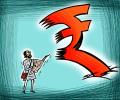
The rupee on Friday slipped 1 paisa to close at its all-time low of 78.33 (provisional) against the US dollar. At the interbank foreign exchange market, the local currency opened at 78.20 and finally settled at its all-time low of 78.33, down 1 paisa from its previous close. During the day, the local unit witnessed an intra-day high of 78.19 and a low of 78.35 against the American currency.

Given all the risks in the world today, including the political instability, economic uncertainty, public health emergence and terrorism, there is not much buffer to absorb a significant change for the worse in the operating environment

So long as there are concerns about world trade, growth and oil prices, the domestic market will remain volatile.

India, the world's third largest energy consumer, has enough petrol, diesel and cooking gas (LPG) in stock to last way beyond the three-week nationwide lockdown, as all plants and supply locations are fully operational, Indian Oil Corp (IOC) chairman Sanjiv Singh said.an Singh, who continued to oversee the mammoth operations of ensuring that fuel reaches every nook and corner despite the loss of his father on the day the 21-day lockdown was declared, said there was no shortage of any fuel in the country and customers should not resort to panic booking of LPG refills.

Caution prevailed across the bourses ahead of the Union Budget.

The government has asked jewellers to provide information on purchases of gold bars or jewellery worth more than Rs 500,000 by the end of this month, a move seen keeping a check on big transactions amid rising smuggling.
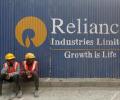
Reliance announced a rights issue of Rs 53,125 crore, which it said was the biggest in India.

When he didn't respond (Mr Saver has lost count of how many relationship managers he has had in the past few years!), the gentleman landed up at his doorstep and started pleading with him to open fixed deposits with the bank, observes Tamal Bandyopadhyay.

'Earnings revival could be two quarters away.'

The move is expected to bolster India's energy security.

Equity indices overcame a wobbly start to clock gains for the third session on the trot on Tuesday, propped up by banking, metal and energy stocks amid a mixed trend in global markets. A recovery in the rupee also bolstered sentiment, traders said. The 30-share BSE Sensex advanced 246.47 points or 0.45 per cent to settle at 54,767.62 after starting the trade on a weak note. In a volatile session, the benchmark hit a high of 54,817.52 and a low of 54,232.82 during the day.

Switzerland may tighten its anti-money laundering laws after a report by a government-appointed group found the country was still subject to financial crime.
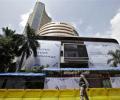
Market ended lower for the third straight session led by IT stocks amid downgrade by Citigroup.

In 2017, a consortium led by Russian state oil company Rosneft agreed to buy Essar Oil for $12.9 billion in India's biggest foreign acquisition of a homegrown company. Rosneft's buyout of Essar's assets was meant to herald a wave of energy investments in India - over six decades after Esso, Caltex and Shell invested in India's refining sector in the 1950s. But the government has tripped up in its efforts to sell Bharat Petroleum Corporation Ltd (BPCL), formerly Burmah Shell, a blue chip public sector company. Bidders include a couple of global funds and resources firm Vedanta.

BSE benchmark Sensex nursed losses on Friday as investors pocketed gains after a five-session winning streak amid a bearish trend overseas. A depreciating rupee and foreign fund outflows further soured risk sentiment, traders said. The 30-share gauge, which had started the trade on a firm note, soon gave up all the gains and finally ended 651.85 points or 1.08 per cent lower at 59,646.15. The broader NSE Nifty snapped its eight-day rally to close at 17,758.45, down 198.05 points or 1.10 per cent.
